
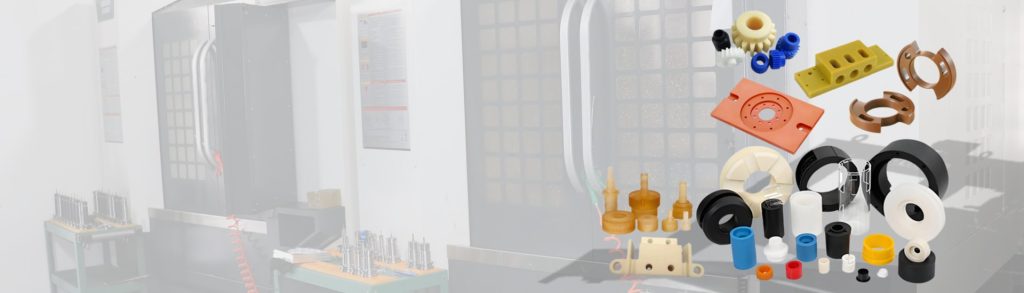
Custom Plastic Parts Machining Source Manufacturer
CNC Plastic Machining, Lathe Machining, High Precision, Fast Delivery.
Processing Breadth and Precision Guarantee Based on Full-Matrix Equipment
- Full-Matrix Equipment – 3-axis, 4-axis, 3+2-axis, and 5-axis configurations, supported by professional CNC lathes and post-processing equipment.
- High-Precision Milling – Haas 4SS stably achieves ±0.003mm; DAKA-U300-S five-axis linkage enables integrated forming of complex curved surfaces.
- Single-Setup Precision – multi-angle, multi-feature machining in one setup avoids cumulative errors, guaranteeing ±0.005mm for parts from miniature connectors to large housings (up to 3500×400×450mm).
Comprehensive Process Control and Quality Assurance from Material to Finished Product
- Complete Post-Processing – tool grinders, ultrasonic cleaners, and barrel polishing machines ensure optimal surface finish and cleanliness.
- Robust Inspection System – profile projectors, Mitutoyo height gauges (0.002mm), and Creaform CMMs (0.003mm) for 100% inspection or high-frequency sampling.
- Traceable Quality – ISO-certified quality management ensures fully traceable, data-driven control from raw material to delivery.
Specialized Technologies for Overcoming Challenges in CNC Plastic Machining
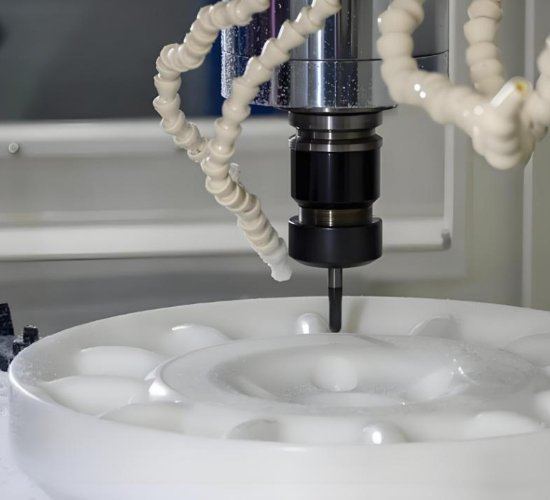
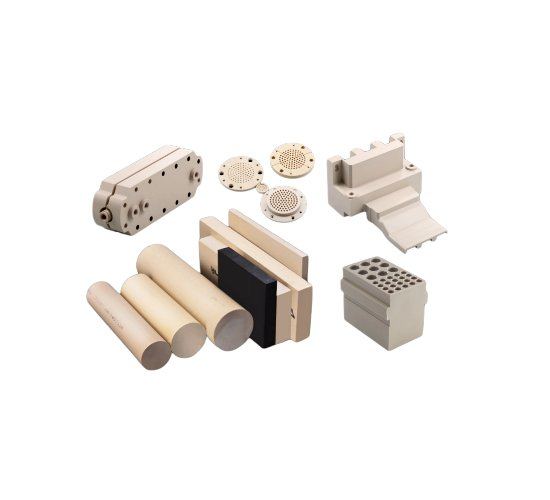
- Thermal Management – high-speed machining centers with sharp tools and precise low-temperature cooling prevent material softening and degradation (PEEK, PTFE).
- Soft-Material Strategies – 5-axis light-cutting with small depths and high feed rates, plus vacuum-adsorption fixturing to minimize clamping deformation.
- Proprietary Database – cutting-parameter database predicts thermal expansion and elastic recovery for medical implants and semiconductor fixtures.
Flexible Manufacturing and Rapid Response for Multi-Industry Applications
- Flexible Layout – over 30 CNC machining centers and lathes, covering worktable sizes from 600×400mm to 2200×1700mm with precision up to ±0.005mm.
- Rapid Response – design-verification prototypes within 3 days; stringent consistency for thousand-piece orders via intelligent scheduling.
- Cost Optimization – process optimization and volume procurement continuously lower total costs for consumer electronics, automotive, medical, and industrial equipment.
CNC Plastic Machining Parts
Custom plastic parts from single-piece prototypes to small-medium batch production.
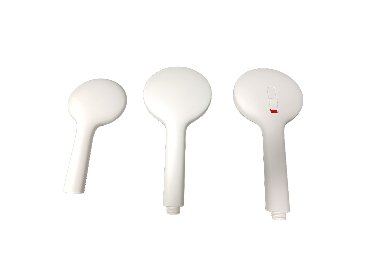
CNC Plastic Machining Prototype
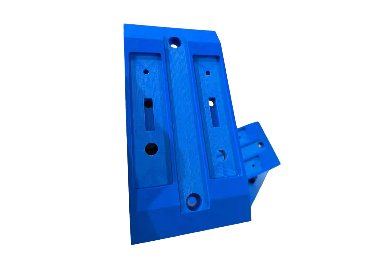
CNC Plastic Machining Parts
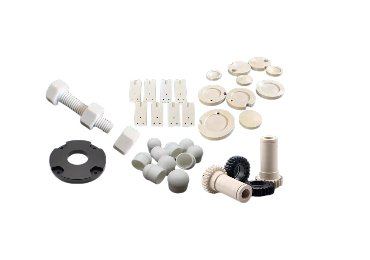
CNC Plastic Machining Parts
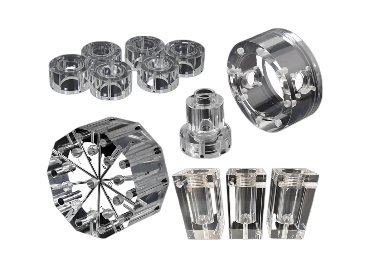
CNC Plastic Machining Of Acrylic Parts
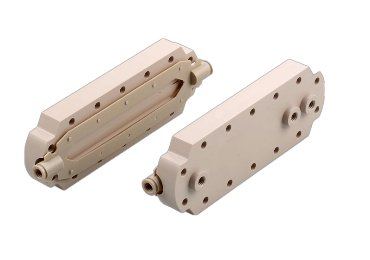
CNC Plastic Machining Of PEEK Parts
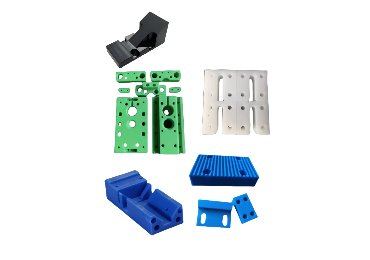
CNC Plastic Machining Parts
CNC Plastic Machining Parts’ Material & Finishing
Material coverage and post-processing options for CNC machined plastic parts.
General Purpose Plastics
- ABS — Good impact strength, easy to machine, paintable/platable
- PP — Lightweight, chemical resistant, low cost
- PS — Transparent, rigid, economical
Engineering Plastics
- Nylon (PA6, PA66) — High strength, wear resistant, self-lubricating
- POM (Acetal) — Low friction, excellent dimensional stability
- Polycarbonate (PC) — High impact resistance, transparent, heat resistant
High-Performance Plastics
- PEEK — High temperature and chemical resistance, excellent mechanicals
- PTFE (Teflon) — Extremely low friction, chemically inert, great dielectric
- PPS — High thermal/chemical stability, flame retardant
Transparent / Optical
- Acrylic (PMMA) — Over 92% light transmission, good weatherability
- PC Optical Grade — High impact resistance with optical clarity
- SAN — Good clarity and rigidity, scratch resistant
Specialty / Composite
- Glass-Filled Nylon — Enhanced stiffness, strength, dimensional stability
- Carbon Fiber Reinforced PEEK — Superior strength-to-weight, high fatigue resistance
- Conductive ESD Plastics — Controlled surface resistivity to prevent ESD
Medical Grade
- Medical Grade PEEK — Biocompatible, sterilizable, for implants/instruments
- Medical Grade PC — Clarity, sterilizability, impact resistance
- USP Class VI Silicone — Soft, biocompatible, high purity
Mechanical Treatment
- Polishing — Smooth surface, mirror-like finish
- Sand Blasting — Uniform matte texture, improved adhesion
- Brushing — Consistent linear grain, scratch resistance
- Buffing — High-gloss finish, deburring capability
Chemical Treatment
- Anodizing — Enhanced corrosion and weather resistance
- Electroplating — Metallic coating, improved conductivity
- Surface Etching — Precise pattern creation, anti-slip properties
Coating Processes
- UV Coating — Hard protective layer, scratch resistance
- Overmolding — Soft-touch surface, impact absorption
- Hot Stamping — Metallic foil transfer, decorative effect
- Heat Transfer Printing — Complex pattern application, durability
Marking & Printing
- Screen Printing — Permanent graphic application
- Laser Engraving — Precise permanent marking, high resolution
- Leather Grain — Simulated leather texture, aesthetic appeal
Advantages of CNC Plastic Machining Technology
Technical Specifications
- Dimensional Accuracy — ±0.05mm standard
- Minimum Feature Size — 0.1mm
- Standard Surface Roughness — Ra 3.6µm
- Thin-Wall Forming — 0.3mm thickness
Capability & Service Level
- 5-Axis Simultaneous — complex curved surfaces formed in one operation
- 3+2 Axis Positioning — multi-angle feature machining
- Turn-Milling Compound — integrated manufacturing of rotary parts
- ISO 9001 — certified processes, 7-day small-batch production, 24-hour emergency response, free DFM analysis
CNC Plastic Machining Service Advantages
Our competitive advantage extends beyond machining to encompass a complete value chain — from material preparation to final inspection — with 100% inspection or high-frequency sampling of critical dimensions for every PEEK medical device component or PTFE sealing part, providing unparalleled confidence in part consistency and reliability.
How to control cutting heat during CNC machining of plastics?
A: Employ a three-stage temperature control strategy: Tool optimization — diamond-coated tools with sharp cutting edges (rake angle >10°); Cooling adaptation — low-temperature air cooling for PEEK, minimal lubrication for ABS, alcohol cooling for PC; Parameter control — high spindle speed (8000-15000 rpm) with shallow depth of cut (≤0.1mm).
What are the anti-deformation measures for thin-wall plastic parts?
A: Implement a four-step anti-deformation process: Structural design — add stiffening ribs (40-60% of wall thickness); Machining strategy — symmetrical alternating cutting with layered machining (each layer 0.05mm); Special fixturing — low-melting-point alloy support filling; Stabilization — constant-temperature aging at 65-80°C for 2-4 hours.
How to reduce tool wear when machining glass-fiber/carbon-fiber reinforced plastics?
A: Professional process combination: Tooling — PCD tools (tool life increased 5-8 times); Parameters — climb milling with high feed rate (≥0.15mm/tooth); Dust extraction — 0.15MPa high-pressure vacuum suction; Speed — recommended 180 m/min for glass-fiber reinforced nylon.
How to achieve optical-grade surfaces on transparent plastics?
A: Three-stage polishing process: Mechanical polishing — diamond polishing paste (grade W3); Chemical polishing — ethanol + ethylene glycol mixture; Flame polishing — oxy-hydrogen flame (280-320°C); plus a clean environment: Class 1000 cleanroom.
How to ensure accuracy in CNC machining plastic parts with metal inserts?
A: Co-machining solution for dissimilar materials: Machining sequence — metal first, then plastic; Temperature control — interface temperature difference <3°C; Tooling — progressive cutting with variable-diameter tools; Compensation — laser scanning plus thermal expansion coefficient difference compensation.