
Aluminum CNC Machining Services: Grades, Tolerances, and Factory Pricing
Send us your CAD file and you can hold a machined aluminum part in your hand within a week. That is the pace we run at XAP Precision, a CNC machining shop that has cut more aluminum than any other material since it opened. This article covers the grades we machine most, the tolerances you can realistically hold, the finishes that change both appearance and price, and the numbers that actually drive cost. If you are comparing suppliers, this is the information you need before you ask for a quote.
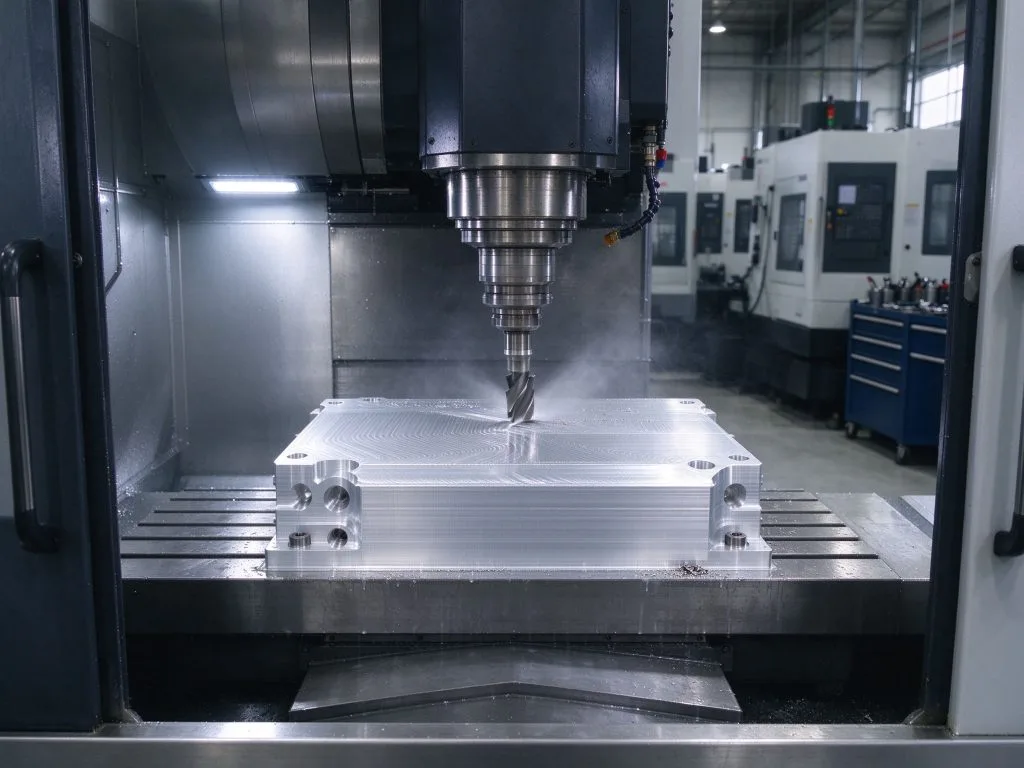
Why Aluminum Is the Default Choice for Machined Parts
Aluminum sits at 2.70 g/cm³, roughly one third the weight of steel, yet it delivers more than enough strength for most structural parts. That combination is why you see it everywhere: drone frames, robot arms, electronics enclosures, heat sinks, EV components. It also conducts heat well and machines fast, which keeps both cycle time and tool wear low. On our floor, a typical aluminum part runs noticeably quicker than the same geometry in steel, and that difference shows up in the price.
Aluminum Grades We Machine and How to Choose
Four grades cover the vast majority of our aluminum orders. The table below is the short version; our CNC materials guide goes deeper into each family.
|
Grade |
What it is |
Typical use |
Cost vs 6061 |
|---|---|---|---|
|
6061-T6 |
All-round structural alloy, weldable, corrosion resistant |
Brackets, housings, fixtures, frames |
Baseline |
|
7075-T651 |
High strength, roughly twice the yield strength of 6061 |
Aerospace links, race parts, high-load components |
~1.5x material |
|
6063-T5 |
Extrusion alloy, great finish response |
Profiles, rails, architectural parts |
Similar |
|
MIC-6 |
Cast aluminum plate, stress relieved, very stable |
Precision plates, vacuum fixtures, tooling |
~1.3x material |
A quick rule from our shop floor: if you are not sure, start with 6061-T6. It machines cleanly, anodizes well, and keeps cost predictable. Step up to 7075 only when the part truly needs the extra strength, and pick MIC-6 when flatness and dimensional stability matter more than raw strength.
Tolerances: What We Hold and What Costs Extra
Standard CNC tolerances at our shop sit at ±0.1 mm, and most parts never need better than that. When the design calls for it, we routinely hold ±0.005 mm on critical features. The honest part is the cost: every tightening of a tolerance adds setup time, inspection time, and scrapped parts. If a 5 mm hole does not need to be 5.00 ±0.01, leave it at a standard callout and spend your budget where it counts. Our DFM guide explains where precision actually pays off.
Two aluminum-specific problems follow you on every job. Large plates warp when you skim one side and release the internal stress, so we machine both sides in sequence and often re-face at the end. Thin walls below 1 mm chatter if feed rates are pushed too hard; we back off and take lighter passes instead of forcing the part. These are the details that separate a part that measures right on paper from one that fits right on assembly.
Surface Finish Options and Their Price Impact
Anodizing is the finish people ask about most, and for good reason. It adds wear resistance and color, and it is the standard way to protect machined aluminum.
|
Finish |
Look and property |
Typical use |
Price impact |
|---|---|---|---|
|
Clear anodize |
Natural metallic look, corrosion protection |
Consumer products, general parts |
Low |
|
Black anodize |
Matte black, durable, hides fingerprints |
Enclosures, optics, instruments |
Low |
|
Hard anodize |
Thicker, very hard, wear resistant |
Sliding parts, tooling, high-wear areas |
Medium |
|
Bead blast + anodize |
Uniform matte, hides machining marks |
Cosmetic housings and panels |
Medium |
One practical note: anodize thickness is typically 5 to 25 microns, so it changes dimensions. If a part is at a tight tolerance, we factor the coating into the machining size instead of pretending the finish is free.
Real-World Machining Challenges (and How We Handle Them)
Aluminum is friendly, but it is not trouble-free. Three issues come up repeatedly:
- Gumming on the tool. Soft alloys stick to cutting edges, especially with dull tooling or wrong speeds. We run sharp geometry and proper chip load; the part comes off clean instead of smeared.
- Thread stripping. Fine threads in aluminum strip easily. We form threads where geometry allows, which gives stronger results than cutting, and we warn you before quoting when a design asks for a weak thread.
- Chip evacuation in deep pockets. Aluminum chips weld back onto the part if they recut. High-pressure coolant and peck cycles keep pockets clean.
None of this shows up on a drawing, but all of it decides whether your parts arrive on time or get remade.
What Determines the Price of an Aluminum Part
Three line items make up almost every quote: material, machine time, and finishing. Material is priced on block size, not final weight, because we start from standard blanks. Machine time follows feature count and complexity, not part size alone. Finishing adds a flat per-batch charge plus a small per-part cost. That is why two parts of the same size can quote very differently, and why a drawing beats guessing from a price list. Volume also matters: a 500-piece run spreads setup across many parts, so per-part price drops noticeably versus a one-off.
Where Machined Aluminum Parts Show Up
Our aluminum work ends up in heat sinks for power electronics, enclosures for measurement instruments, robot arm links, EV battery components, and custom fixtures for our customers own production lines. For complex geometry, we often move the part to our five-axis machines to cut setup count and improve accuracy, and standard three-axis work runs through our CNC milling line.
FAQ
Can you match a specific anodize color?
We can match common standards such as black, clear, and gold. For custom colors, order a sample batch first; anodize shades can vary slightly between runs, and it is cheaper to approve a sample than to redo a production lot.
What is your fastest lead time for an aluminum prototype?
For a simple part, 3 to 5 working days including standard finishing. If you need it faster, tell us at the quoting stage, and we will confirm what is possible before you commit.
Do you charge for DFM feedback?
No. Our engineers review your drawing and flag machining problems before quoting. That review is free, and it is the fastest way to avoid expensive surprises later.
Get a Quote for Your Aluminum Parts
Start with a simple STEP or PDF drawing. Send it to us through the contact page, and you will get back a price, a lead time, and any design suggestions within one working day. You can also review our full aluminum CNC machining page for the complete capability list while you prepare your files.