
Stainless Steel CNC Machining: 303 vs 304 vs 316, Tolerances and Costs
Stainless steel is the material buyers order when a part has to survive moisture, chemicals, or repeated cleaning. It is also the material that quietly inflates a quote if the shop does not know what it is doing. At XAP Precision we machine stainless daily, and this guide walks through grade selection, the work-hardening problem that catches everyone, realistic tolerances, and what you are actually paying for.
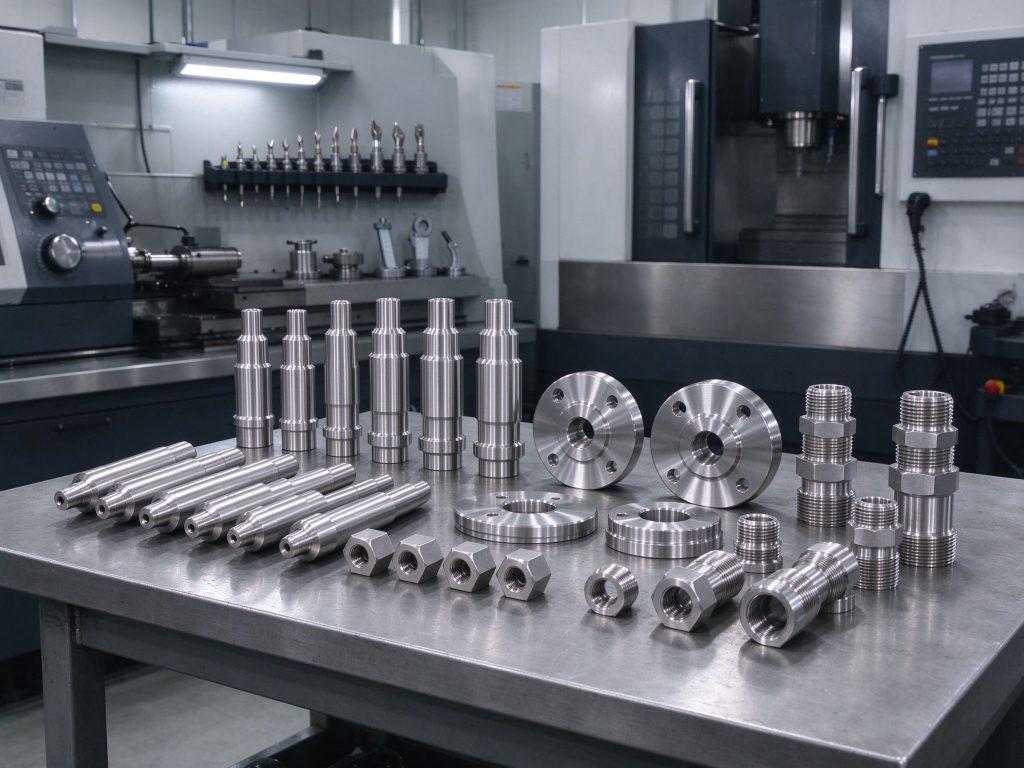
Why Stainless Steel, and Why It Costs More to Machine
Compared with aluminum, stainless is roughly three times heavier, noticeably stronger, and far more resistant to corrosion. The trade-off is machinability. Stainless work-hardens fast, pulls at the cutting edge, and runs hotter. Cycle times stretch, tool life drops, and both effects land in the quote. None of this means you should avoid stainless, only that a realistic budget matters from the start.
303 vs 304 vs 316: Which Grade Should You Machine?
Three grades answer almost every stainless question we receive. Here is how they compare on the two things that matter most: how easy it is to cut, and how well it resists corrosion.
|
Grade |
Machinability |
Corrosion resistance |
Typical use |
|---|---|---|---|
|
303 |
Best; added sulfur makes it cut freely |
Good, lower than 304 |
Fittings, fasteners, shafts |
|
304 |
Good; tougher than 303 |
Excellent for most environments |
Food equipment, enclosures, general parts |
|
316 |
Harder; molybdenum toughens it |
Best; resists chlorides and saltwater |
Marine, chemical, medical |
Our default advice: pick 303 for machined components where corrosion demands are ordinary, 304 when the part will see food contact or cleaning chemicals, and 316 only when chlorides or saltwater are in the picture. If you are unsure, our steel CNC machining page lists the full range we stock, including 17-4PH for high-strength applications.
Work Hardening: The Problem Everyone Meets
Here is what actually happens when stainless is machined wrong. The surface layer hardens under the cutting edge, the next pass then tries to cut that harder skin, the tool rubs instead of cutting, and the part ends up with a damaged surface and a burned-up insert. The fix is not exotic. We maintain a constant feed, use sharp tooling with a positive rake, and take a real depth of cut so the tool gets under the hardened layer rather than skating over it. Dwell and timid passes are the enemy of stainless, not the solution.
Tolerances and Surface Finishes for Stainless Parts
Standard tolerance is ±0.1 mm and precision work at ±0.005 mm, the same capability as our aluminum line. What differs is surface treatment. Most stainless parts ship in the as-machined state, which is fine for industrial use. When appearance or hygiene matters, two finishes come up regularly:
- Passivation. A chemical process that removes free iron from the surface and restores corrosion resistance after machining. It is cheap and we include it when specified.
- Electropolishing. Produces a bright, smooth, easy-to-clean surface. It improves corrosion resistance and is common in food and pharmaceutical equipment, but it adds cost and a small lead time.
If your part is a decorative piece, tell us early. Grinding and polishing stainless to a mirror finish is a separate operation, and quoting it after the fact always costs more than including it in the original order.
Cost Reality: Why Stainless Costs More
Three factors move the price, in this order. Material is the first, and it is simple: stainless stock costs more per kilogram than aluminum, and you pay for the block, not the final weight. Machine time is second, and it is where shops differ most. A shop that understands stainless feeds and speeds finishes the job in fewer hours; one that fights the material charges you for the fight. Finishing is third, with passivation adding little and electropolishing adding a clear premium. If you want an accurate number, send the drawing rather than asking for a rule of thumb, because geometry decides how long the part sits on the machine.
Where Machined Stainless Parts Show Up
We machine stainless for food processing lines, medical instruments, marine hardware, chemical fittings, and custom fasteners. Turning-heavy parts such as shafts and connectors go through our turning line, while prismatic parts like housings and brackets run on our milling line. If the design is complex, a DFM review before quoting usually finds ways to cut cost without touching function.
FAQ
Does stainless steel need passivation after machining?
Not always, but usually. Machining can smear free iron onto the surface, which rusts and defeats the point of stainless. Passivation removes it and restores the corrosion resistance you paid for. It is inexpensive, so we recommend it unless the part is decorative and never exposed to moisture.
Can you machine 17-4PH stainless?
Yes. 17-4PH machines in the annealed condition and is then heat treated for high strength. It is a common request for aerospace and tooling parts, and we machine it regularly.
What is the typical lead time for stainless steel parts?
5 to 7 working days for standard parts, slightly longer when electropolishing is involved. As with aluminum, we confirm the date at quoting, and faster delivery is possible when the schedule allows.
Get a Quote for Your Stainless Steel Parts
Send us your STEP or PDF drawing via the contact page and you will receive pricing, lead time, and grade suggestions within one working day. If you are still comparing materials, our materials guide compares stainless against aluminum and plastics so you can decide with the full picture.